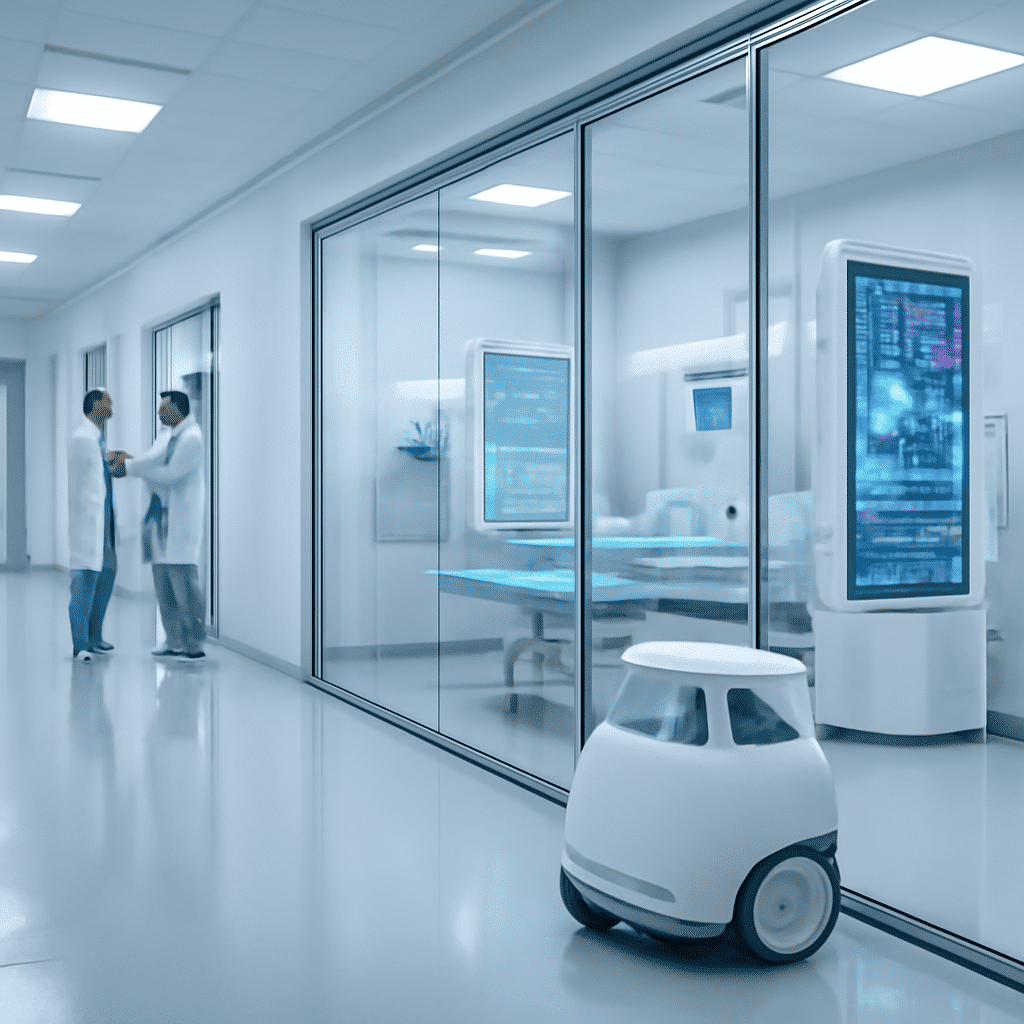
Artificial Intelligence (AI) is revolutionizing healthcare at an unprecedented pace, bridging gaps in diagnosis, patient management, and operational efficiency. As healthcare systems worldwide face the dual pressures of growing patient populations and increasing demands for higher-quality care, AI stands out as a pivotal tool to transform medical practice.
One of the most significant contributions of AI in healthcare is its ability to enhance diagnostic capabilities. AI algorithms, especially those grounded in machine learning and deep learning, have demonstrated remarkable proficiency in analyzing medical images and detecting anomalies at a speed and accuracy unmatchable by the human eye. Examples include AI systems trained to identify early signs of diseases such as cancer in mammograms, liver disease in CT scans, and retinopathy in eye examinations. By identifying abnormalities earlier and with greater precision, AI aids clinicians in making more informed decisions, potentially leading to faster interventions and improved patient prognoses.
Another promising frontier is patient management. AI-driven platforms in hospitals and clinics are streamlining operations by predicting patient admission rates, optimizing staffing needs, and managing logistics. These predictive analytics not only enhance the patient experience by reducing waiting times and improving resource allocation but also contribute to substantial cost savings in healthcare delivery. Moreover, AI-powered chatbots and virtual health assistants are engaging with patients directly, allowing for personalized monitoring and management of chronic conditions like diabetes and hypertension. By maintaining regular check-ins outside the clinical setting, these systems encourage patient adherence to treatment plans and prompt interventions when necessary.
Furthermore, AI is also making strides in personalized medicine. By analyzing vast datasets encompassing genetic information, lifestyle factors, and clinical histories, AI technologies are propelling the advancement of tailored treatment plans that are as unique as the individuals themselves. This level of customization enhances treatment efficacy, minimizes adverse reactions, and optimizes therapeutic dosages, which is particularly beneficial for patients suffering from complex or rare conditions.
Despite its transformative potential, the integration of AI in healthcare is coupled with challenges that need addressing. Privacy concerns, the need for vast amounts of data to train AI systems, and the risk of bias in algorithms are critical issues that must be managed carefully. Ensuring robust data protection measures and fostering transparency in algorithmic decision-making are essential steps in mitigating such risks and enhancing the credibility and reliability of AI solutions.
Additionally, there's an imperative need for interdisciplinary collaboration when developing AI tools in healthcare. Input from clinicians, AI specialists, ethicists, and patients themselves is necessary to ensure these technologies align with real-world clinical needs and are both safe and effective.
In conclusion, AI in healthcare holds immense promise for elevating care standards, improving patient outcomes, and realizing a more efficient healthcare ecosystem. Its evolution is not an isolated innovation but rather an integral aspect of a smarter, more adaptive healthcare infrastructure. As stakeholders in the healthcare industry continue to explore and overcome the challenges presented by AI, its potential to transform healthcare delivery in the coming years is boundless, heralding a future where technology and medicine work hand-in-hand to deliver superior patient care.